Sleeping
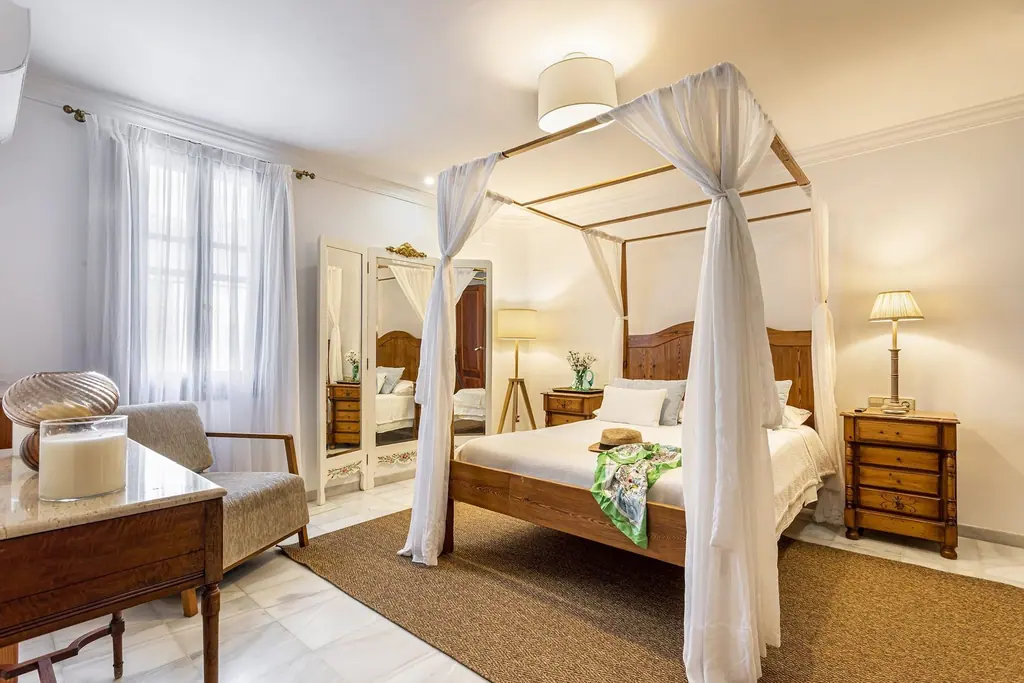
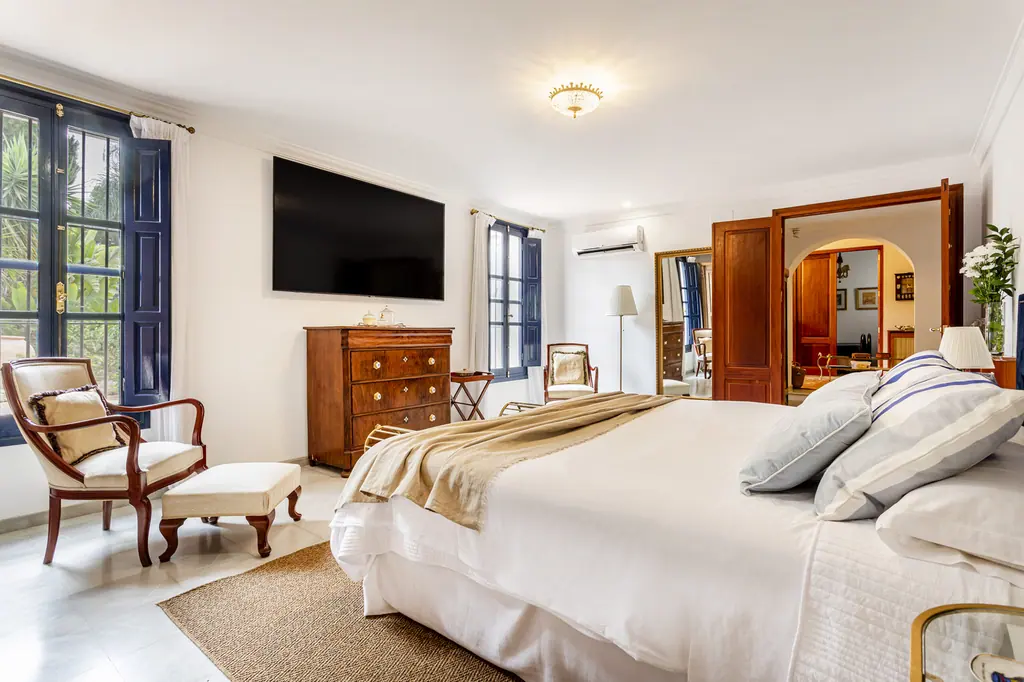
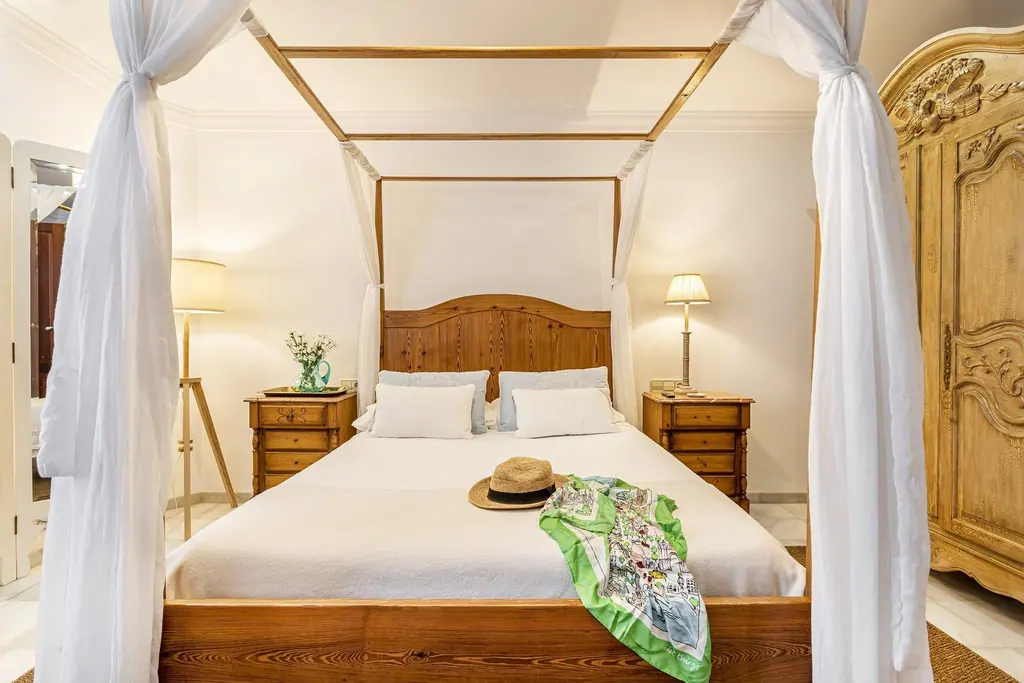
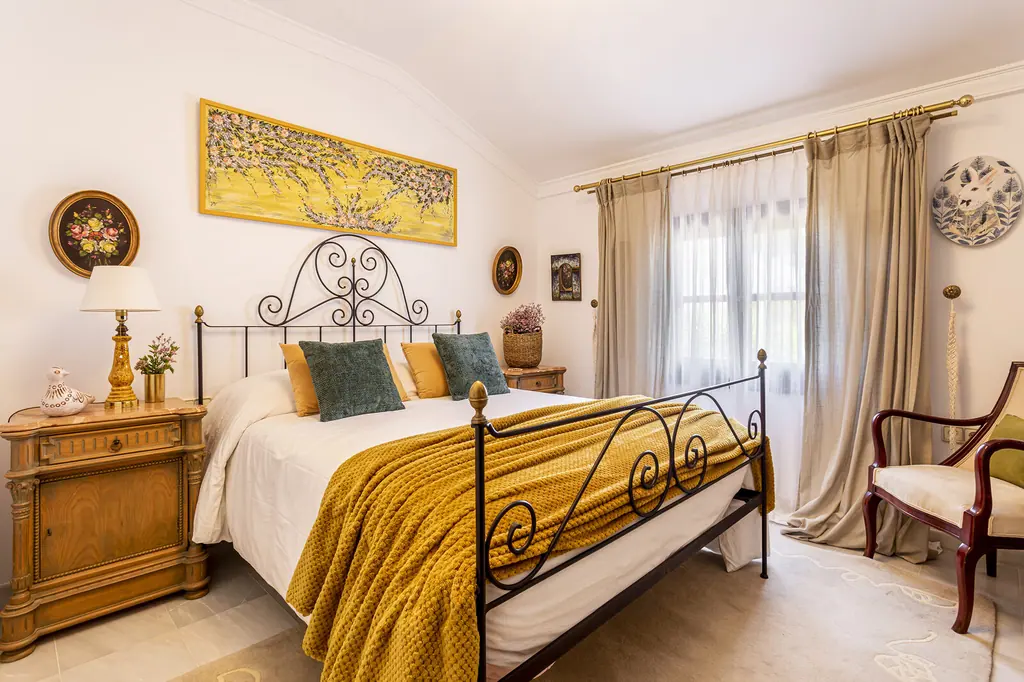
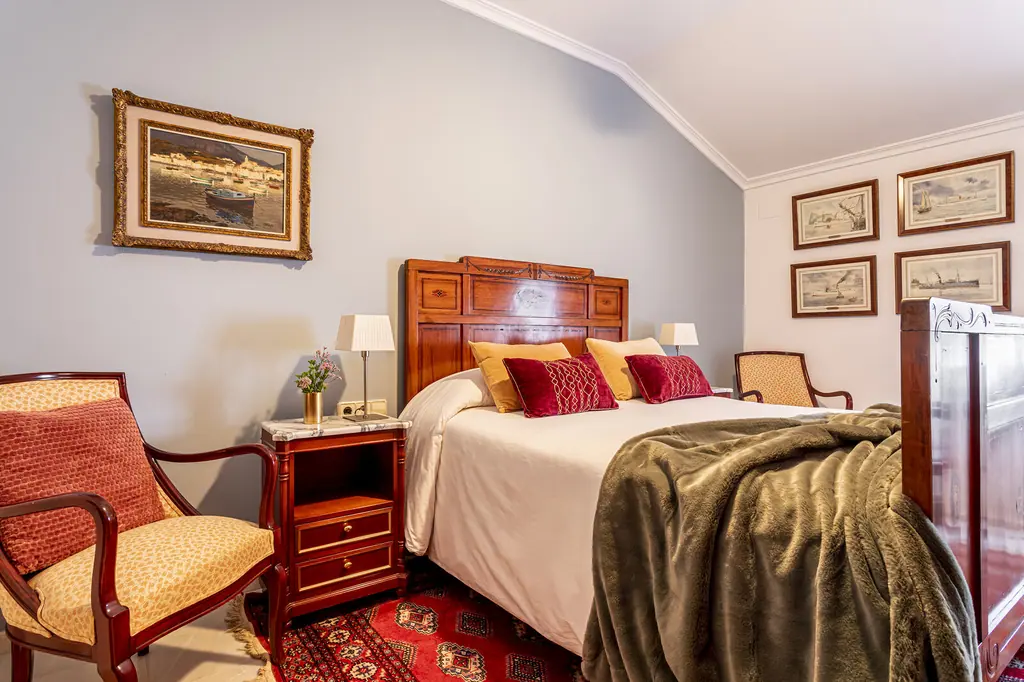
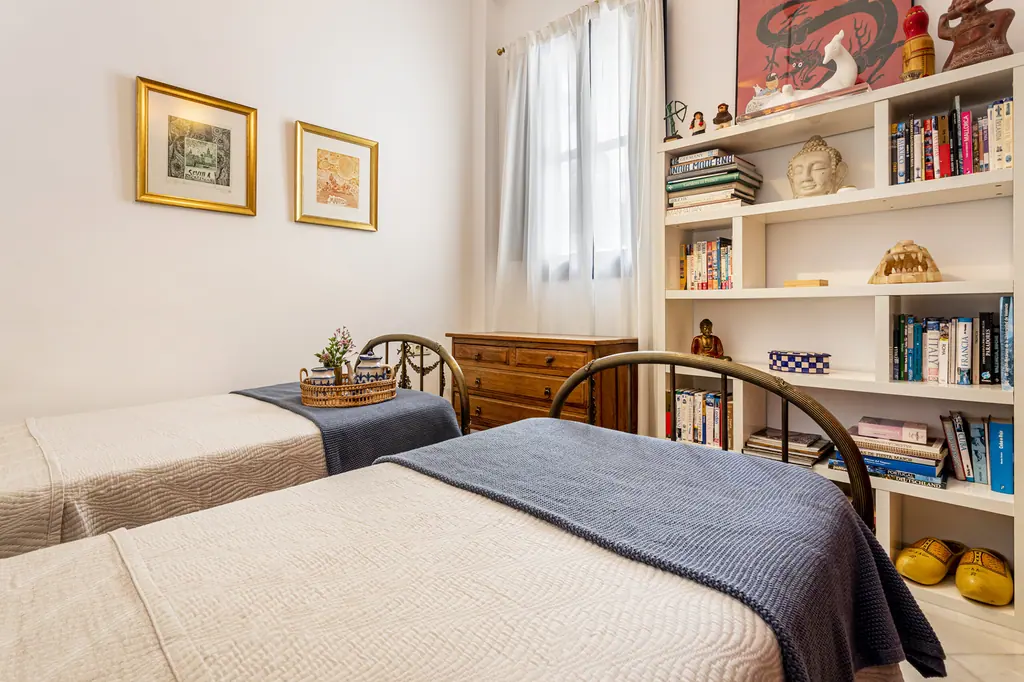
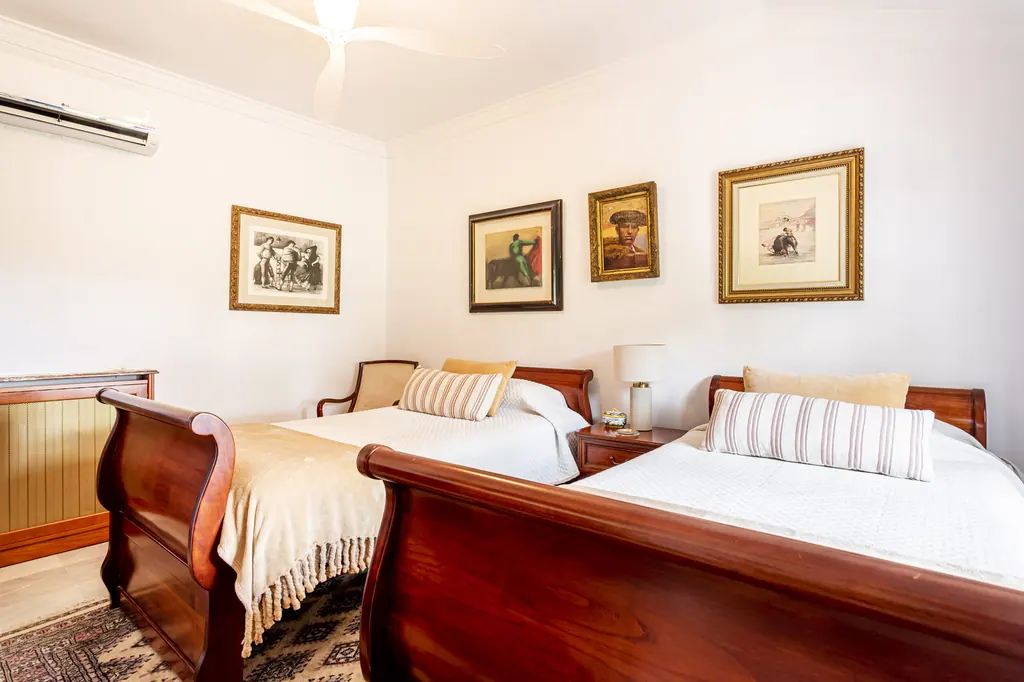
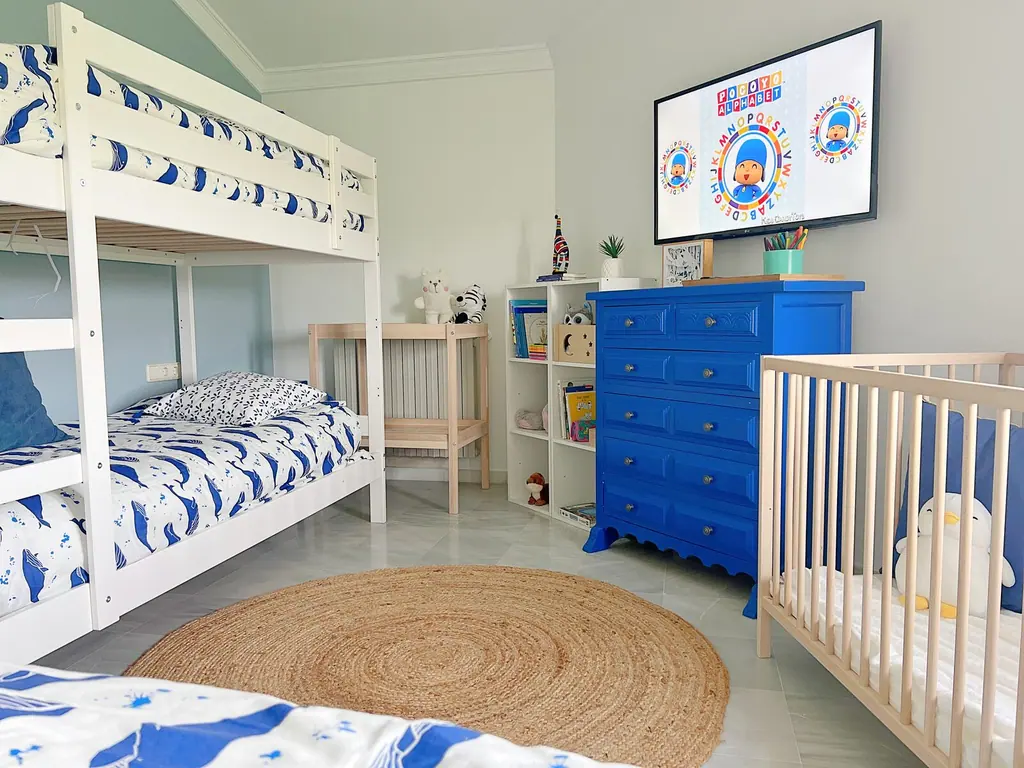
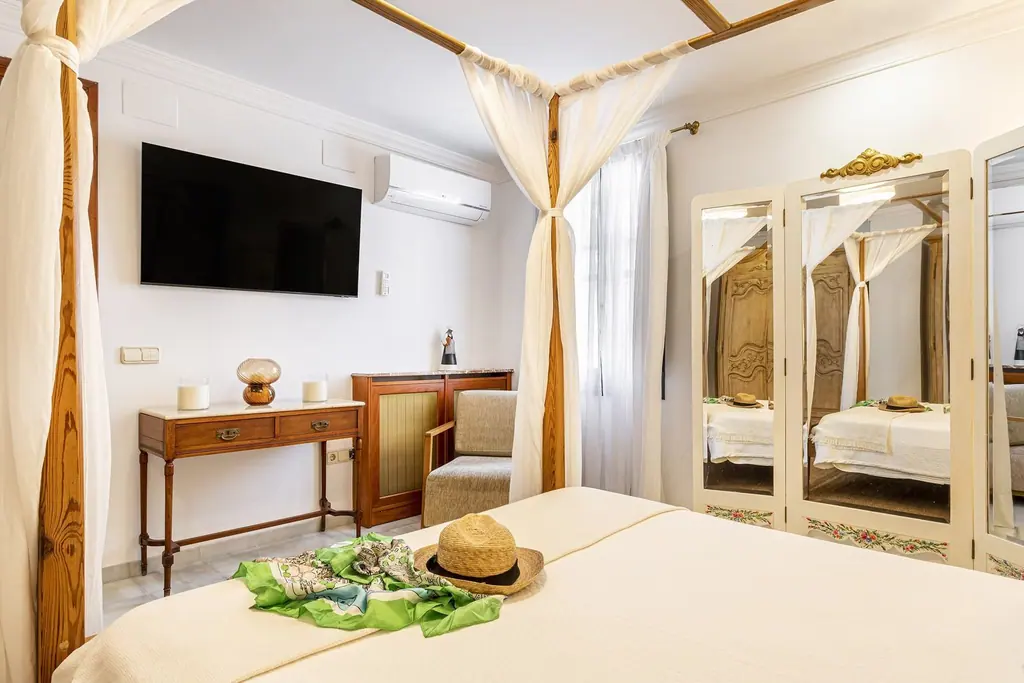
Seven named bedrooms, fourteen beds and five bathrooms, arranged so a large group doesn’t sleep stacked on top of each other. Each room has its own theme, colour and paintings.
All with air conditioning and heating, smart TV and winter radiators. In two of the rooms the single beds join together to make a double.
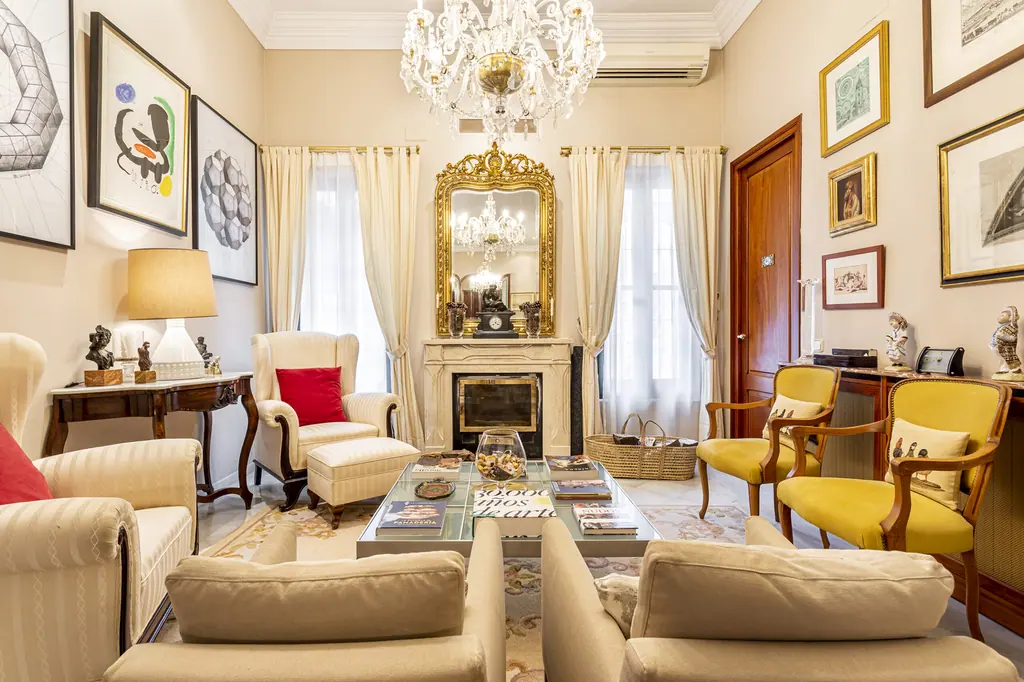
The main sitting room
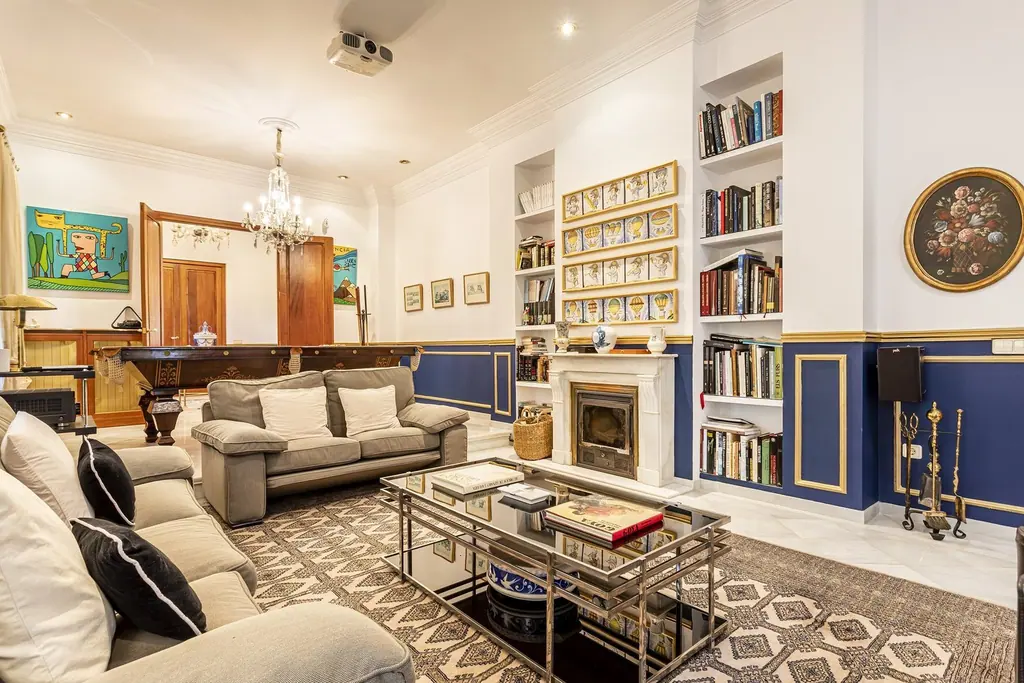
The fireplace, with the armchairs set around it so fourteen people can hold a single conversation. Not split into huddles — one conversation.
Firewood included.
The dining room
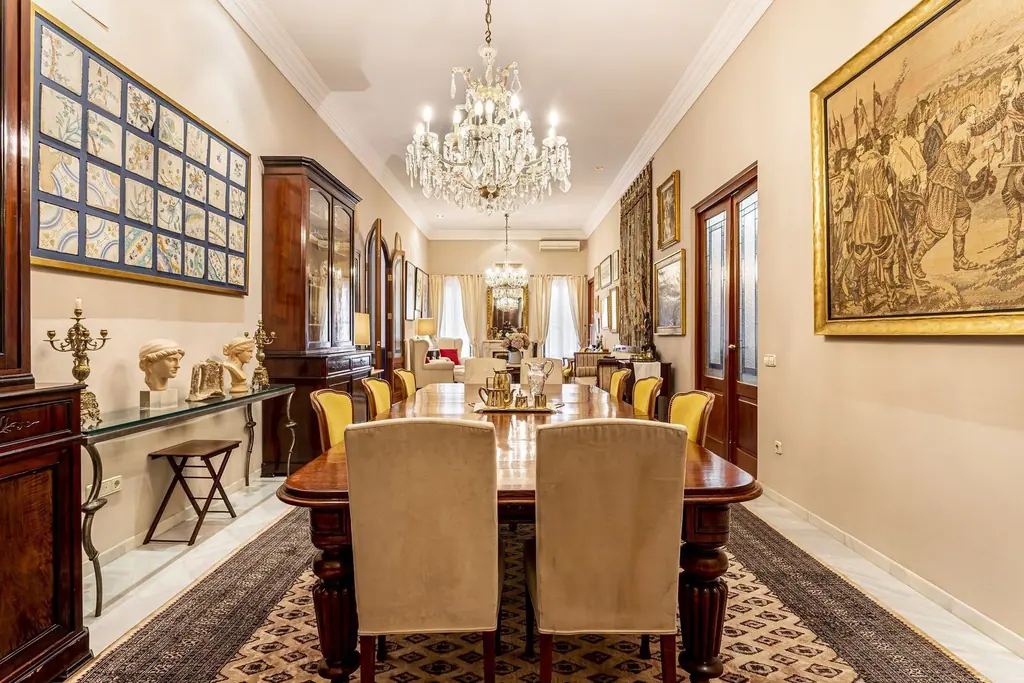
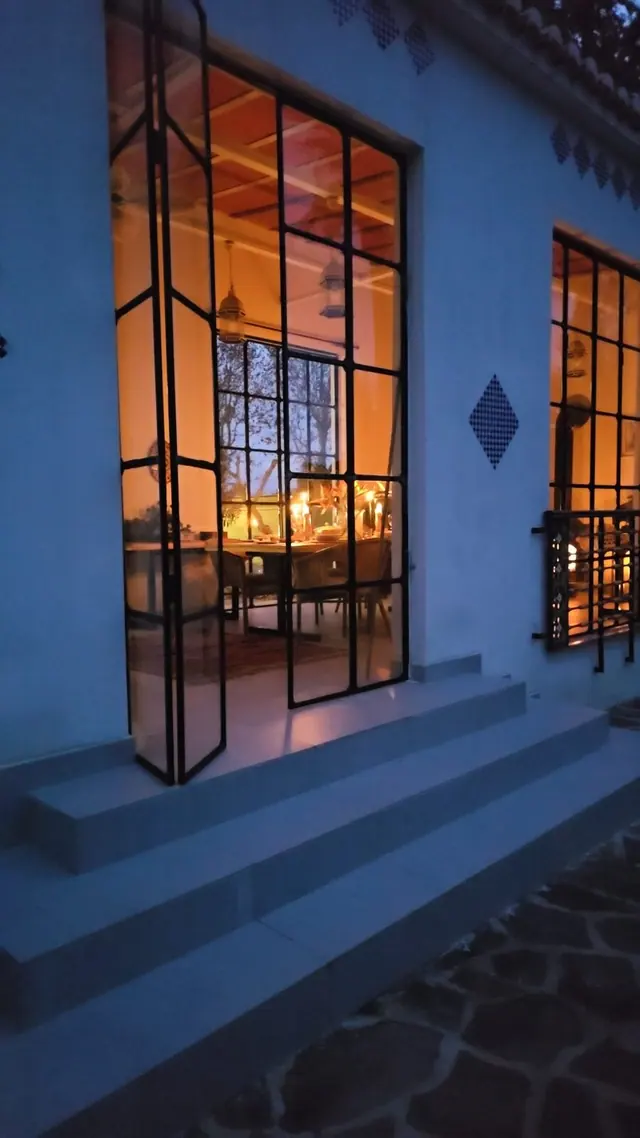
An extending table where fourteen people eat indoors without being squeezed in. Two matching sideboards line the room, full of collected china.
Crystal glasses, tumblers, cups and plates for everyone. The antique Limoges china comes out on request, arranged in advance.
Cooking
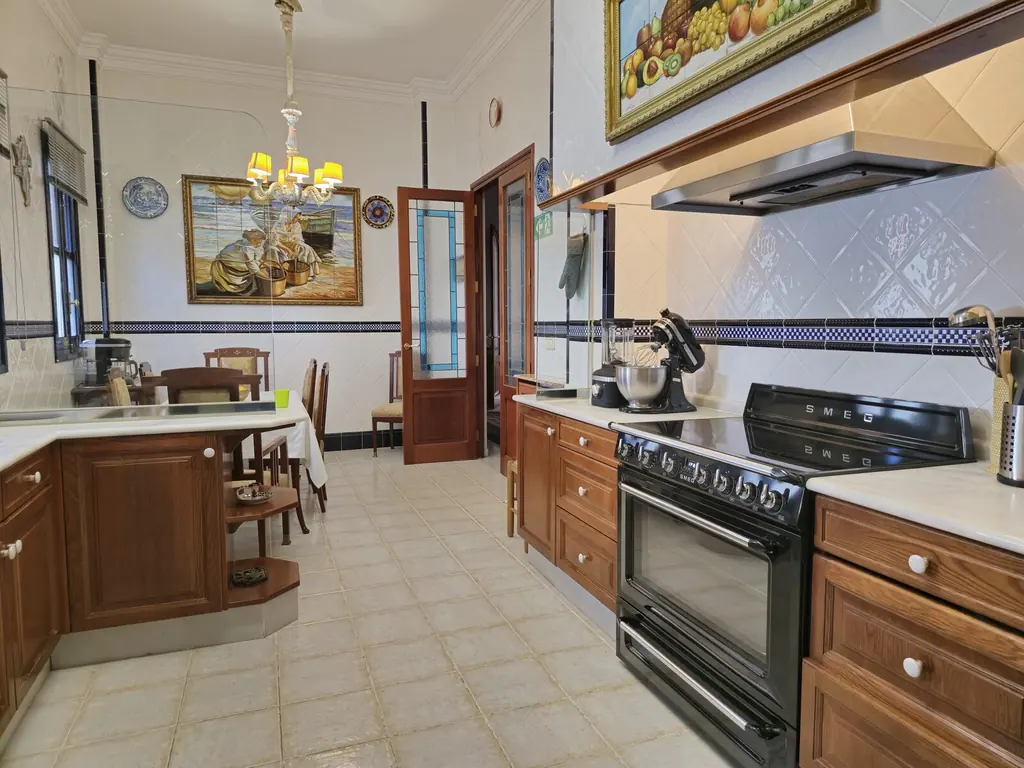
A ninety-centimetre Smeg range that looks like the fifties and was built now, with oven and a wide extractor hood. White Carrara marble worktops. Built for actually cooking for fourteen, not for reheating.
KitchenAid mixer, toaster and blender. Arcos knives, always sharp. Pots, pans and utensils in every size.
Coffee
Three ways to make coffee, because everyone has their own: a KitchenAid espresso machine with its grinder, Nespresso capsules, or filter coffee.
If something you want isn’t here, ask. We’re reachable for anything the kitchen needs.
The billiard table
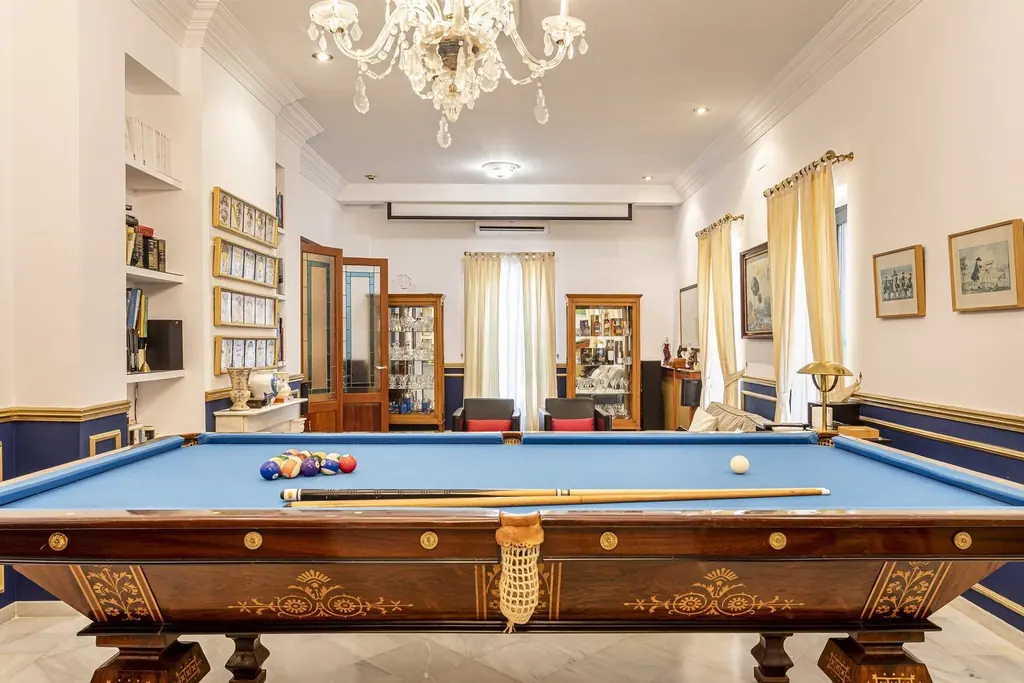
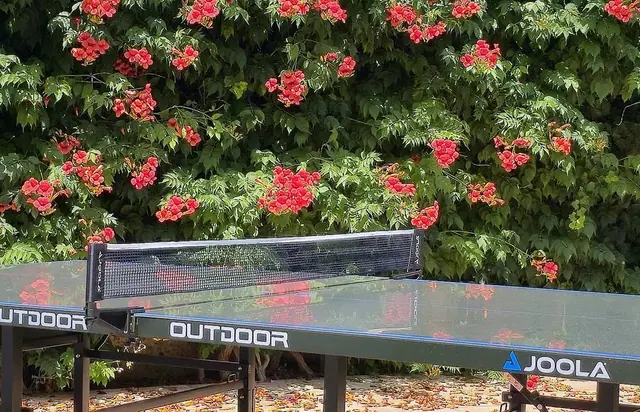
An eighteenth-century billiard table, in use. It isn’t on display: people play on it. There are games on top of it, and you can ask for chess, draughts, backgammon or bingo.
The cinema
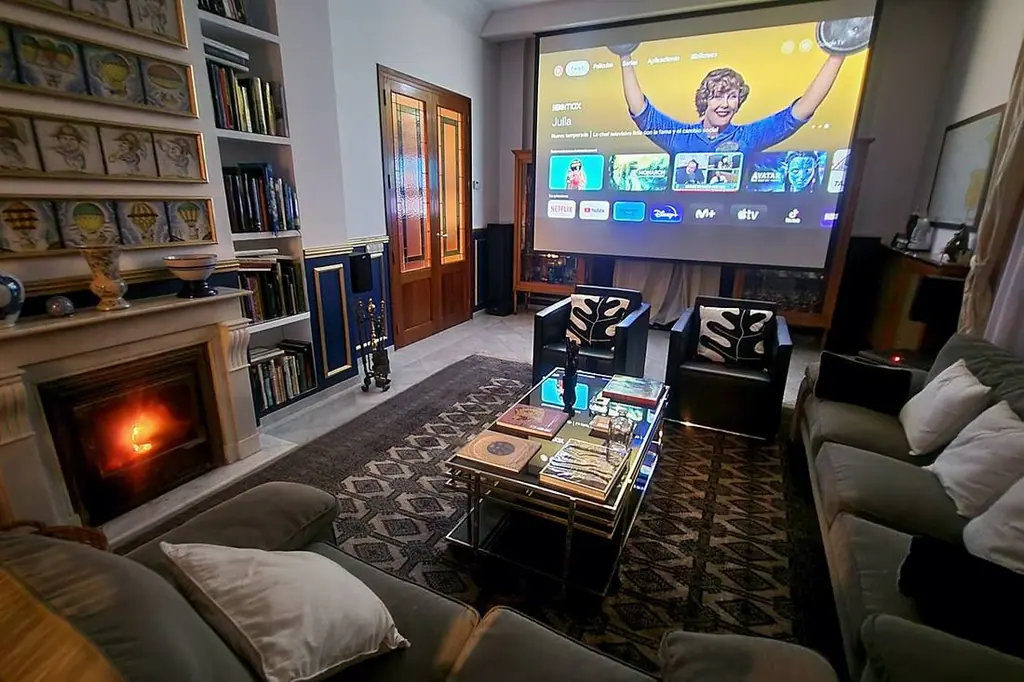
In the same room as the billiard table: 140-watt Marantz 7.1 sound, an Epson projector and a large screen. All fourteen fit on the sofas around it.
Air conditioning in summer. In winter the fire gets lit, or the radiators if you’d rather watch the film without flames.
Reading
Reading isn’t only looking at words. Beside the cinema fireplace there are two hundred and forty books on Spanish art: images of everything that can be called art tied to Valencia and to Spain.
And in the travel room, books to get lost in Japan, New York or Singapore.
The art
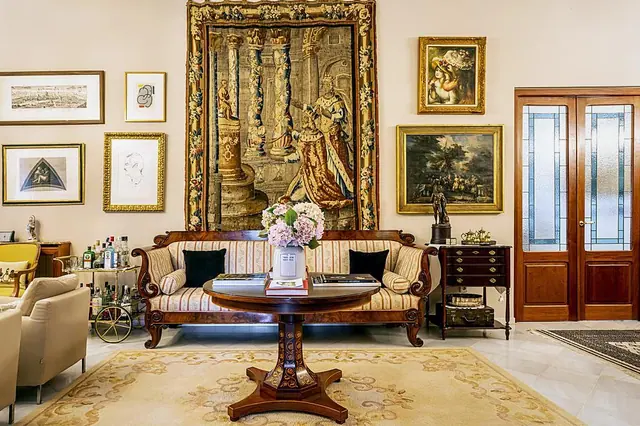
The house was furnished over centuries, not decorated in an afternoon. There are oils, engravings and canvases in the shared rooms and in every bedroom.
Here, pieces are restored, not replaced. That’s the difference between a house that was decorated and one that was gathered. We tell you what’s here when you arrive.
The ceramics
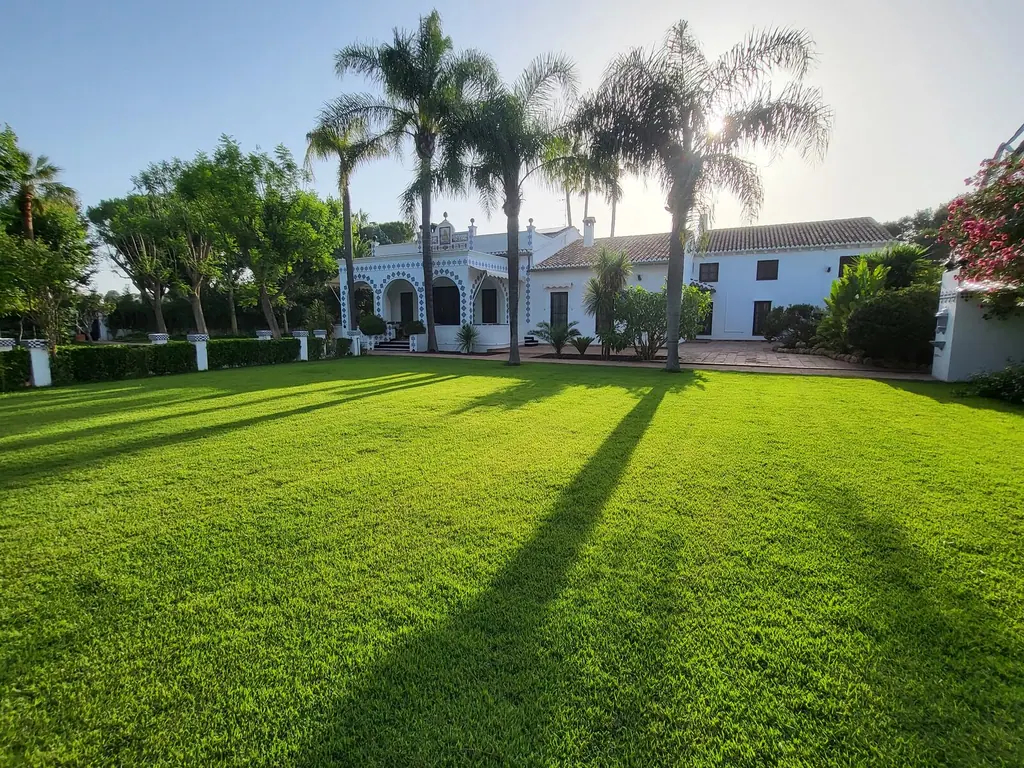
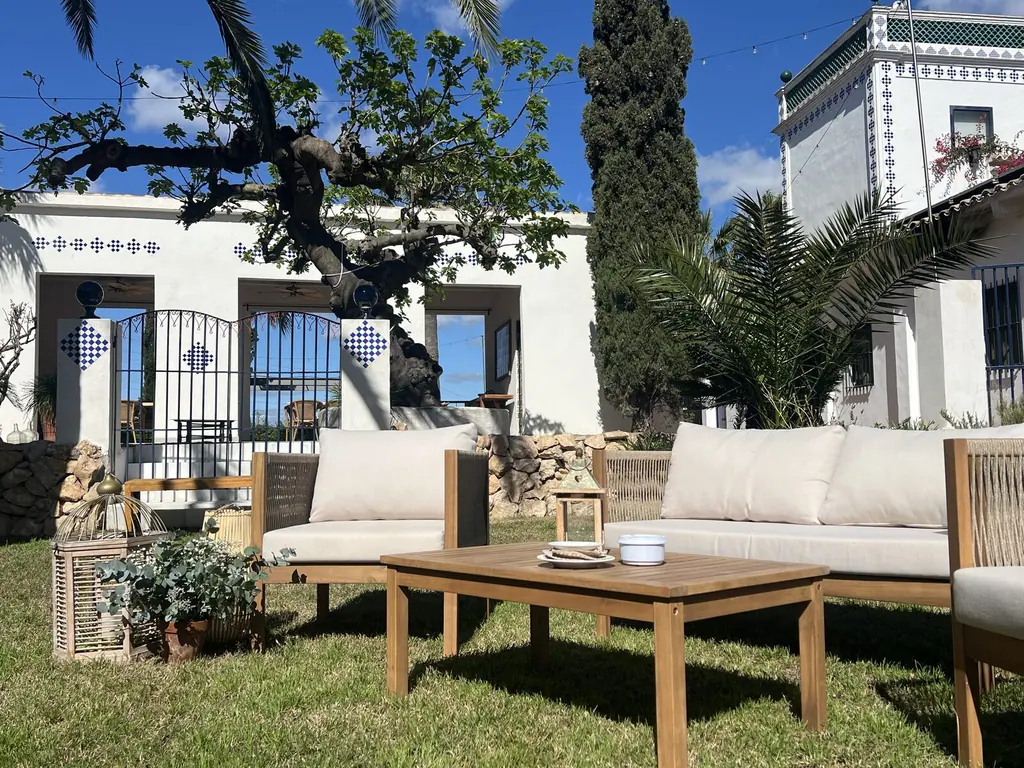
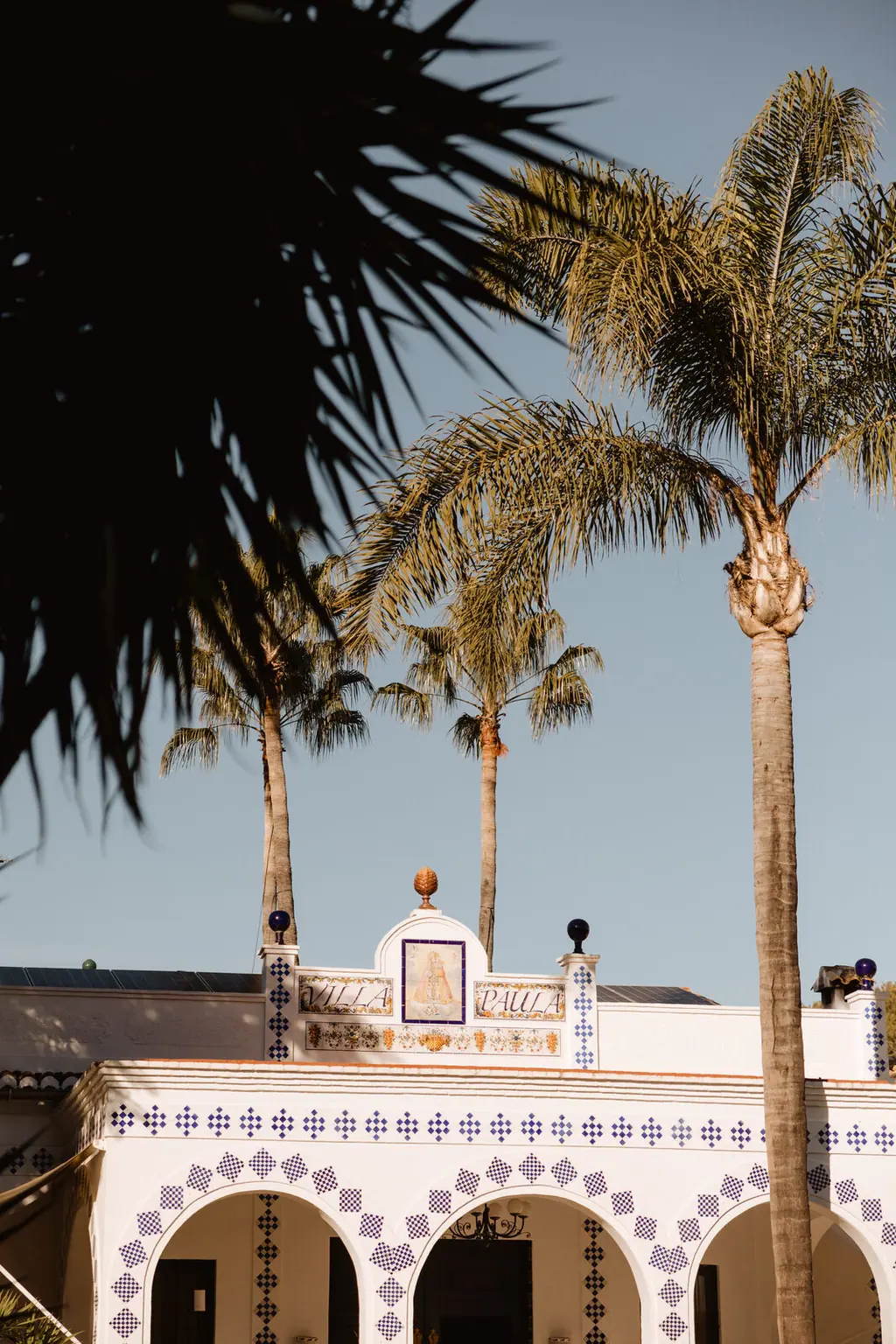
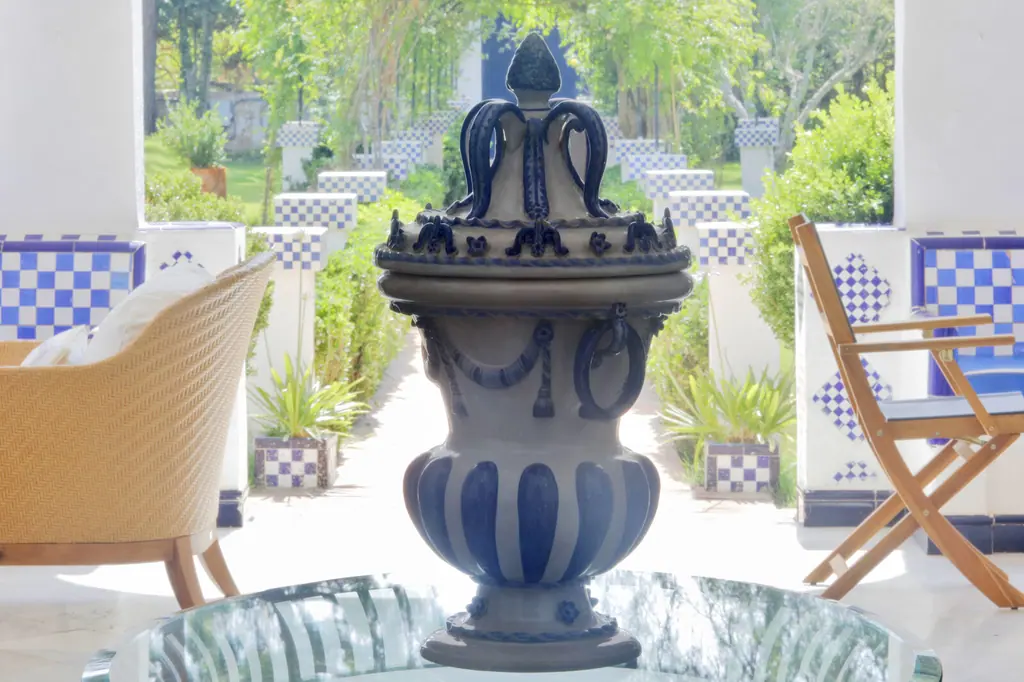
Restored ceramics spanning five centuries, and the cobalt-and-white chequer on the façade that gives the house its face.
The porch
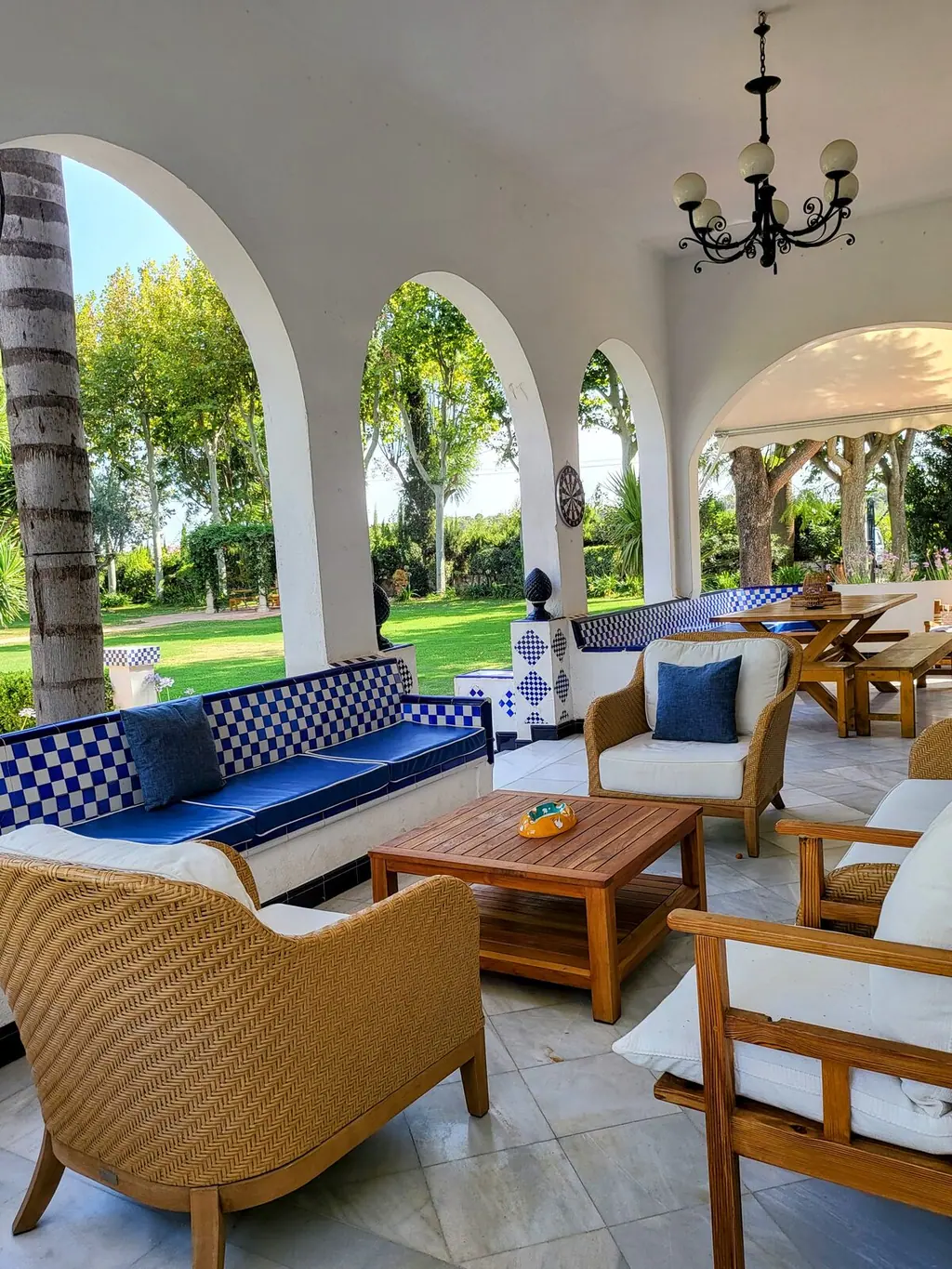
The morning sun comes up and lands here. It’s exactly where it should be, and it’s where everyone ends up without anyone suggesting it. Sofas at one end, a table at the other, room for the whole group at once.
A small fridge for everyday things. Under the cushions there’s cobalt ceramic work that is a piece in its own right; covering it is a shame, but sitting on it without cushions is worse.
The pool
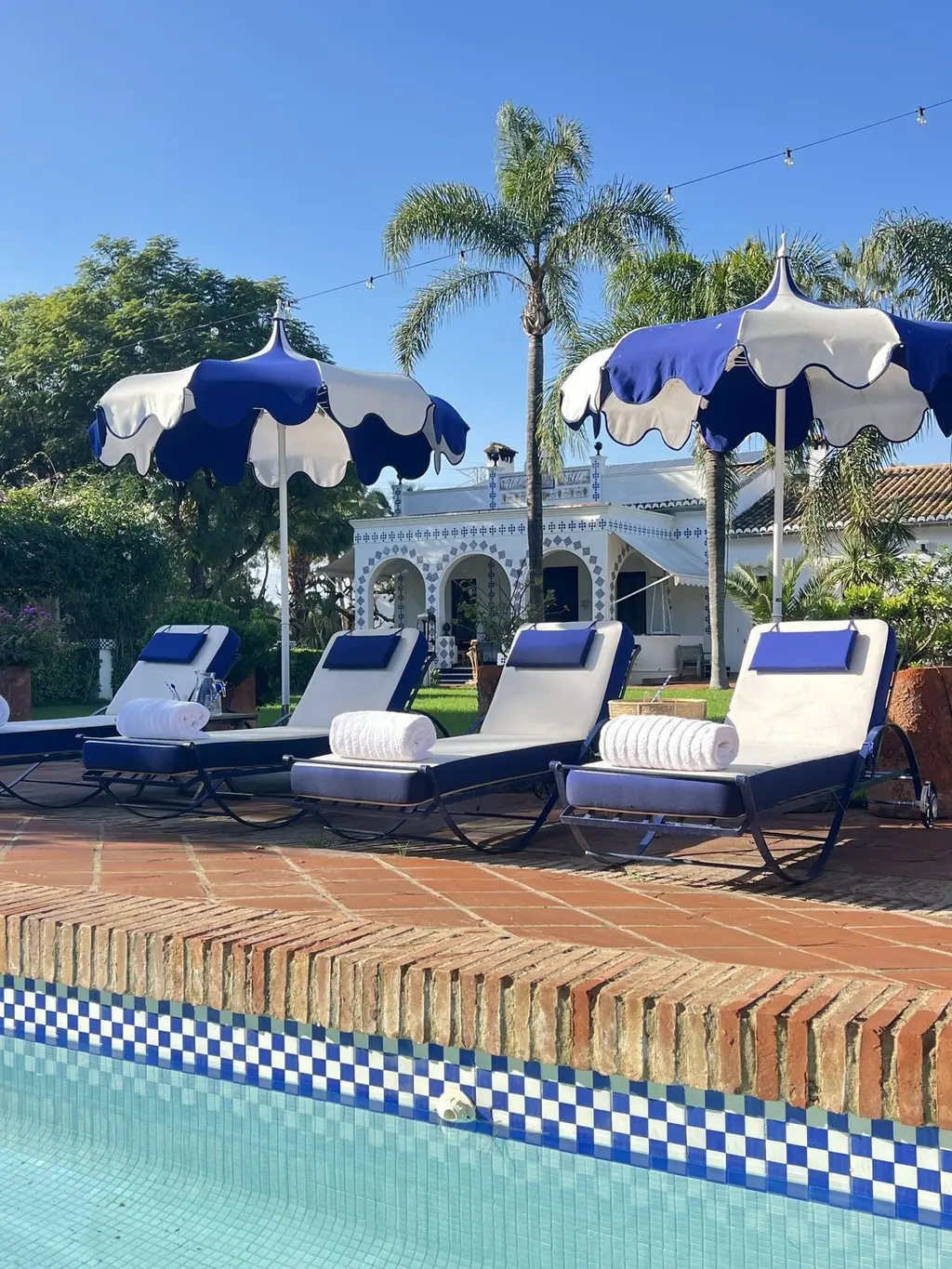
Private, outdoors, and kept clean and open twelve months a year. It isn’t heated, so in summer it’s used all day and in winter mostly by guests from northern Europe.
The waterline carries the same cobalt-and-white chequer as the façade. Around it, loungers and parasols for the whole group.
The wood-fired hot tub
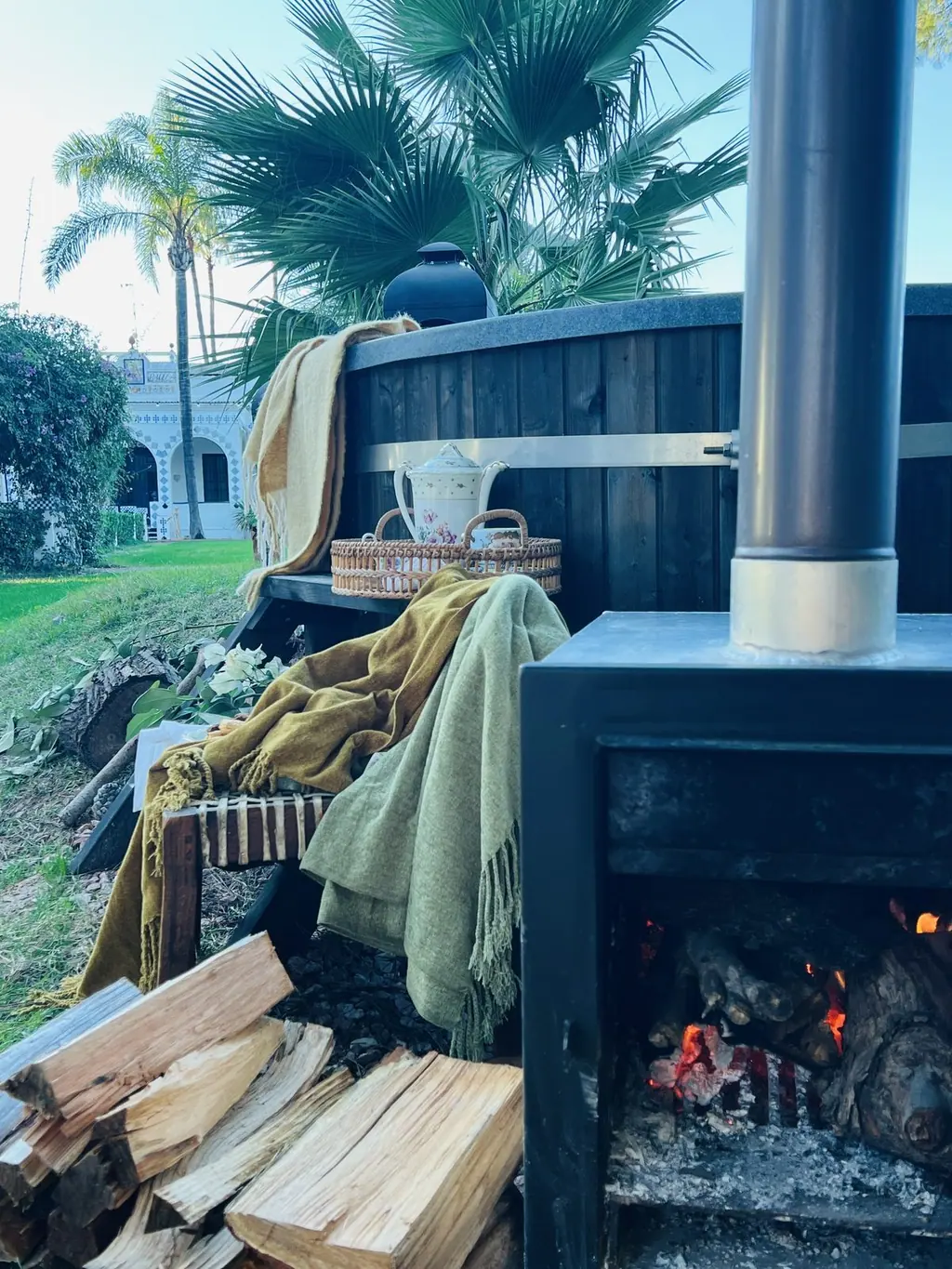
Outdoors, for eight people, with a real wood-burning stove: you light it and it takes its time, like a fireplace. It works all year round.
You need to let us know in advance so it’s hot when you want it.
A 40-metre pergola
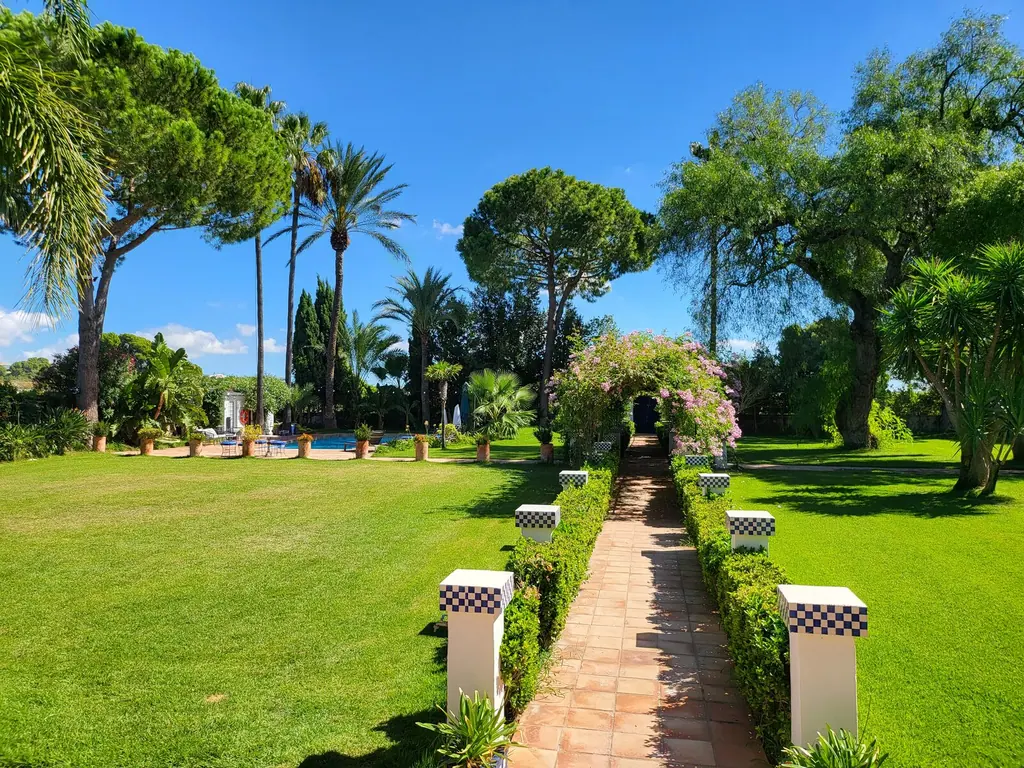
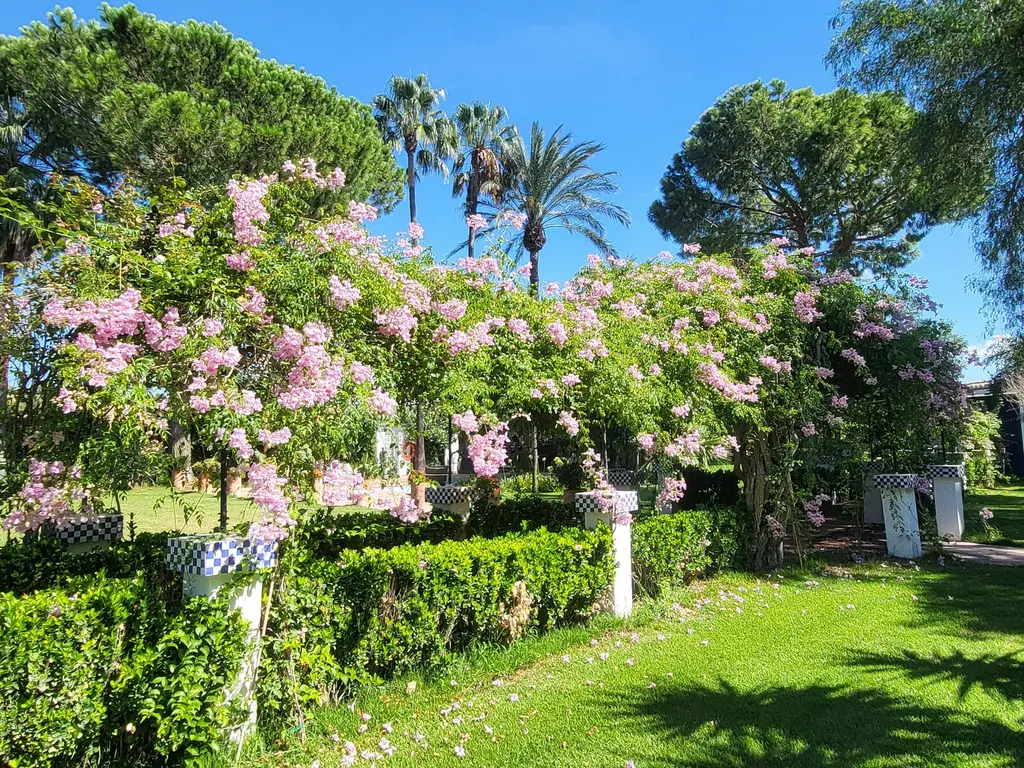
Forty metres covered in jasmine, bougainvillea and roses — fully covered, not half. A pergola like this isn’t planted: it takes decades to close over. This one already has.
It’s the most photographed thing in the garden, and the one thing nobody could replicate even if they copied everything else.
The hundred-year-old fig tree
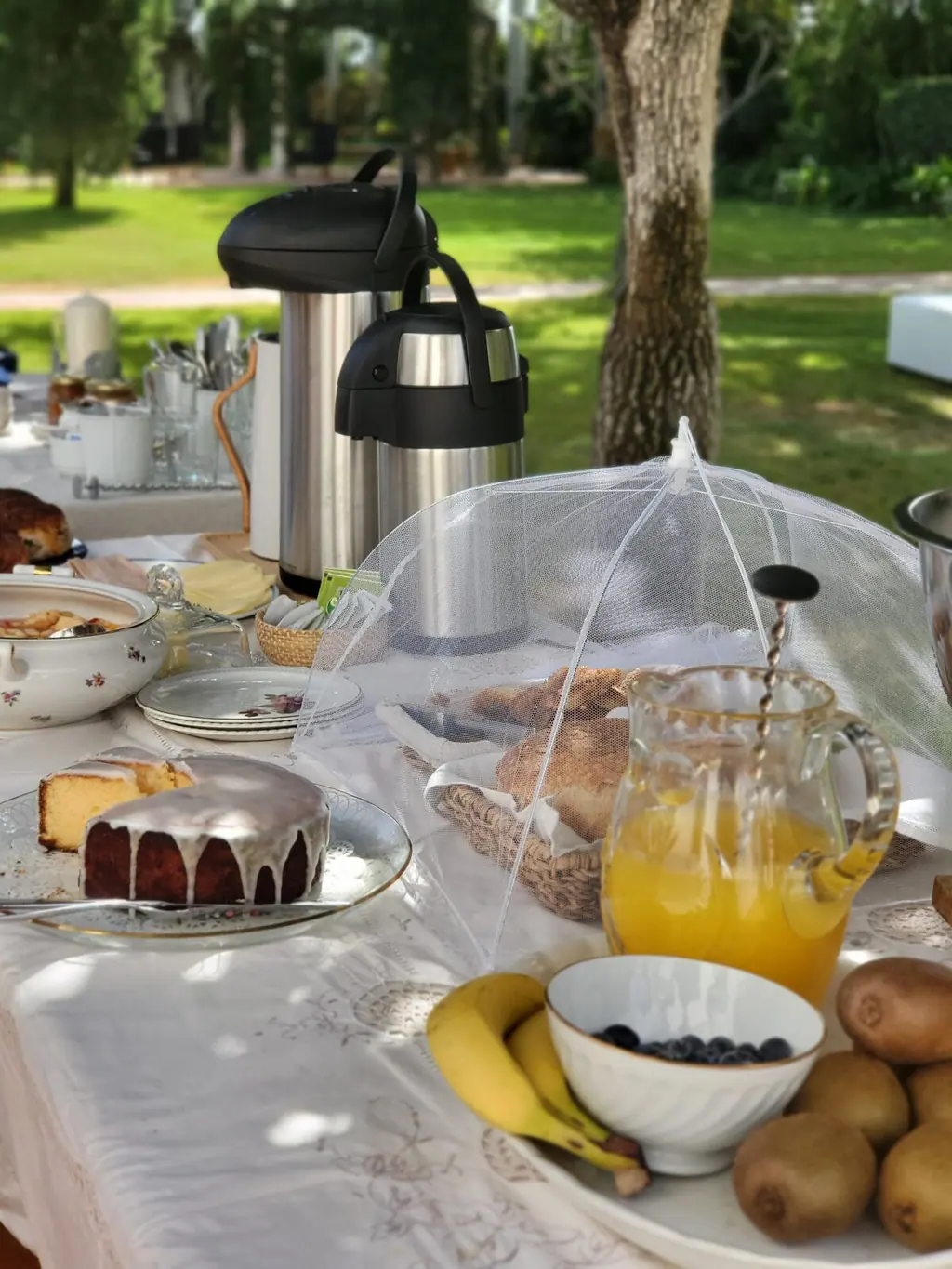
A fig tree over a century old, throwing enough shade for a table underneath.
The garden pavilion
An enclosed pavilion seating twenty-eight, with heating, cooling and a wood stove. It’s the answer to what happens if it rains.
The barbecue
A charcoal barbecue, in its own corner of the garden.
The open fire
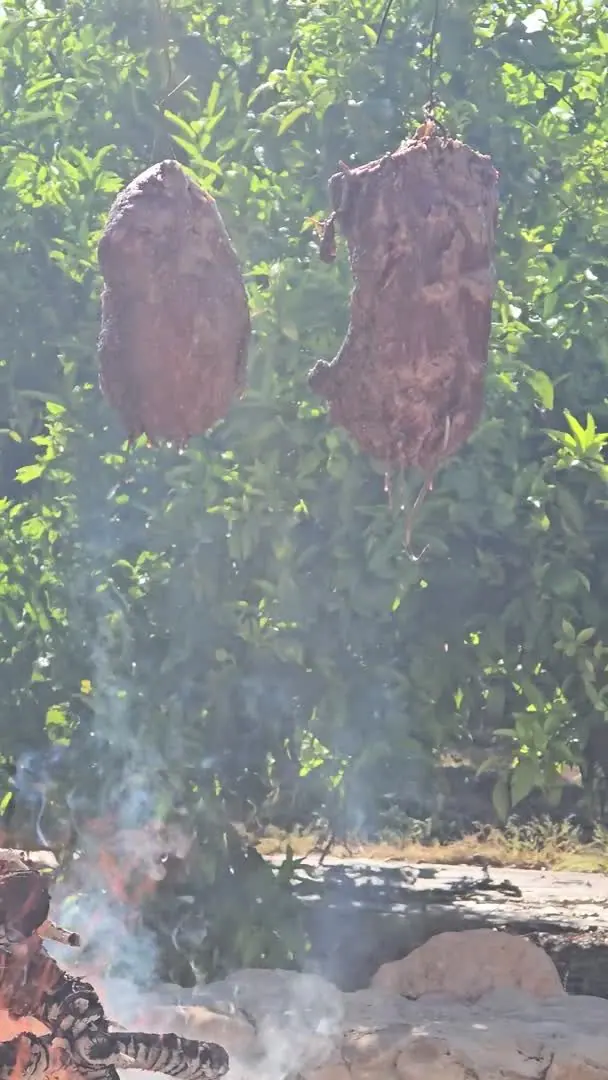
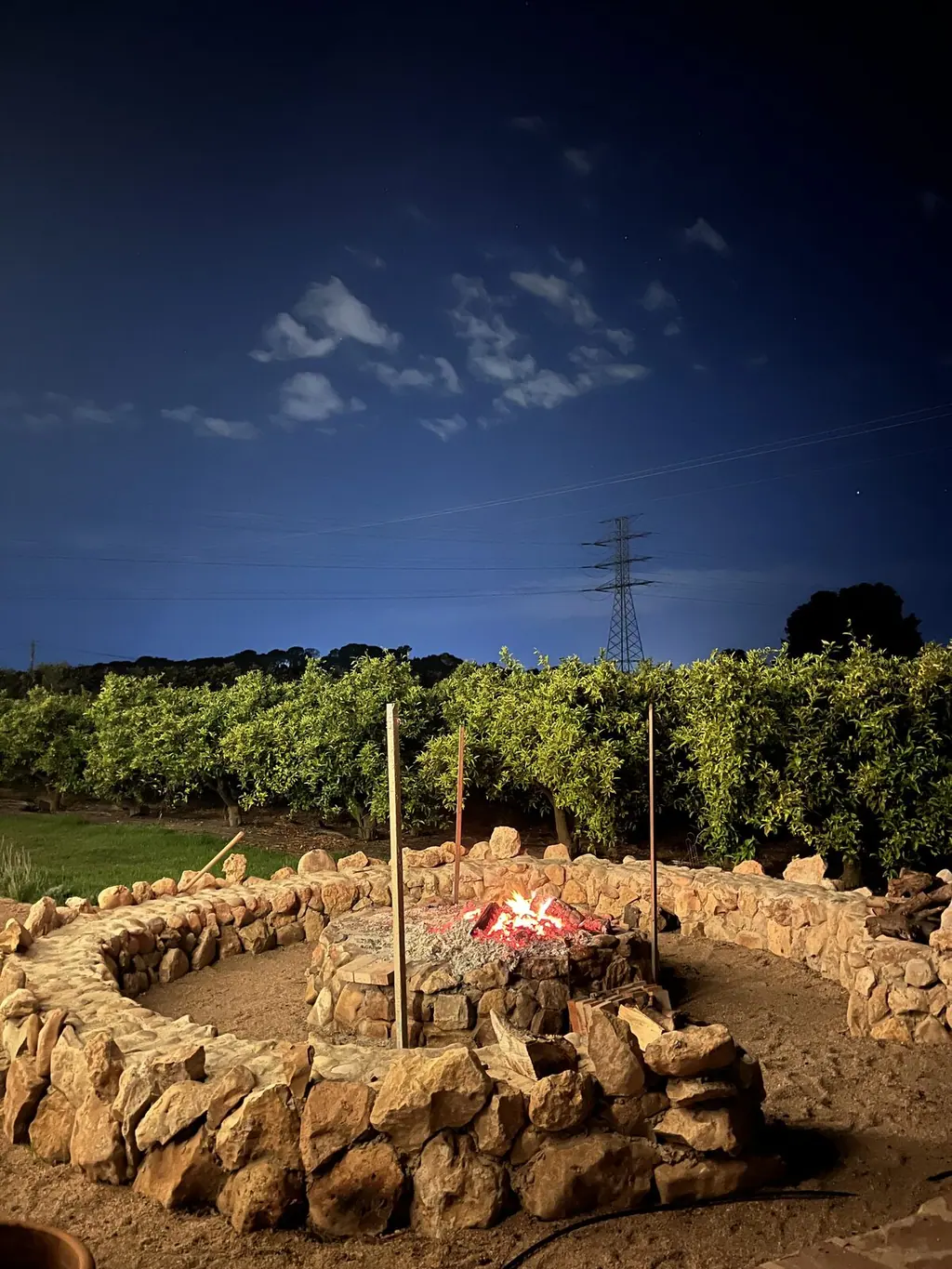
The open fire is somewhere else again, in another part of the garden. Live flame, for rice or just for sitting around.
The clay oven
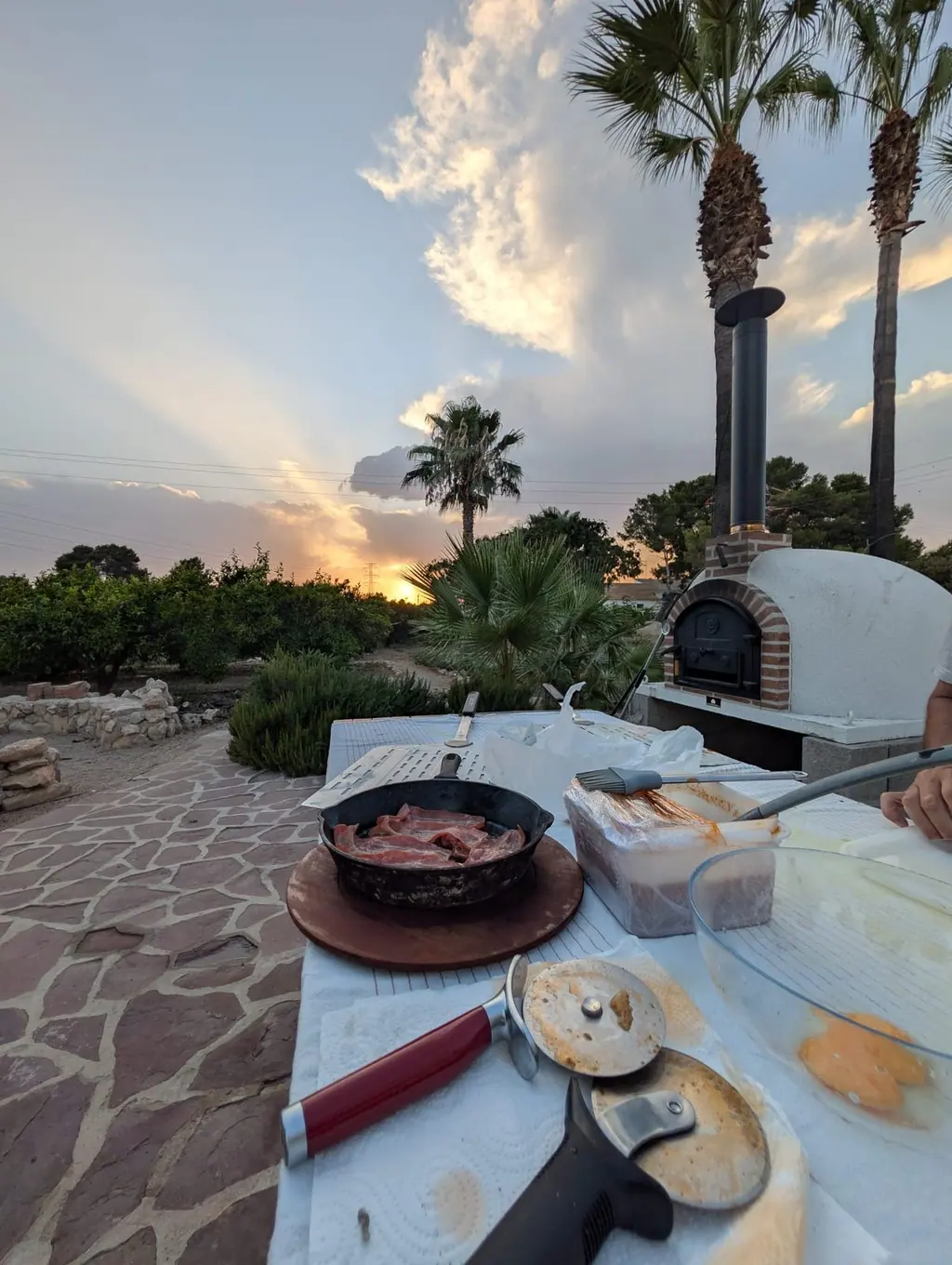
A wood-fired clay oven, the third of the three outdoor fires. None of the three is near the others.
The play areas
They aren’t fixed: they move around the different gardens depending on the group and the ages of who’s coming.
The Virgin above the canopy
An eighteenth-century Virgen de los Desamparados, hand-painted, closes the canopy of the house. A one-off piece, unsigned.
The two small pergolas
Besides the big one there are two smaller, more sheltered pergolas covered in white and pink bougainvillea. They shade the spots the big one doesn’t reach.
The cactus courtyard
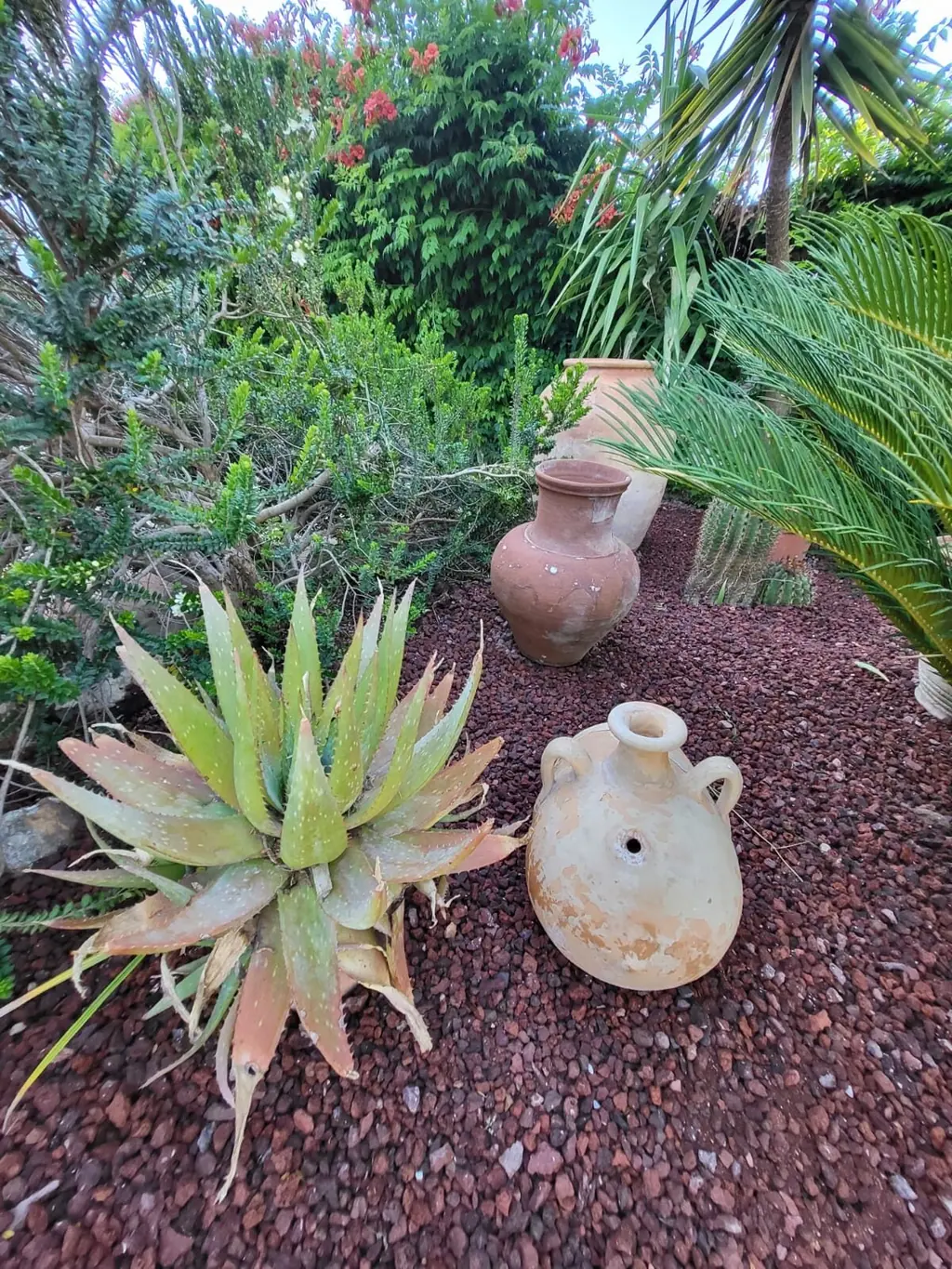
A garden of cacti and dry-climate planting — the other face of a Mediterranean garden: the one that asks for no water and looks well twelve months a year.
The vegetable garden
The vegetable garden is its own part of the grounds, not a patch hidden behind the house.
As of this year there’s a winter crop, so there’s something to pick in January too.
Parking
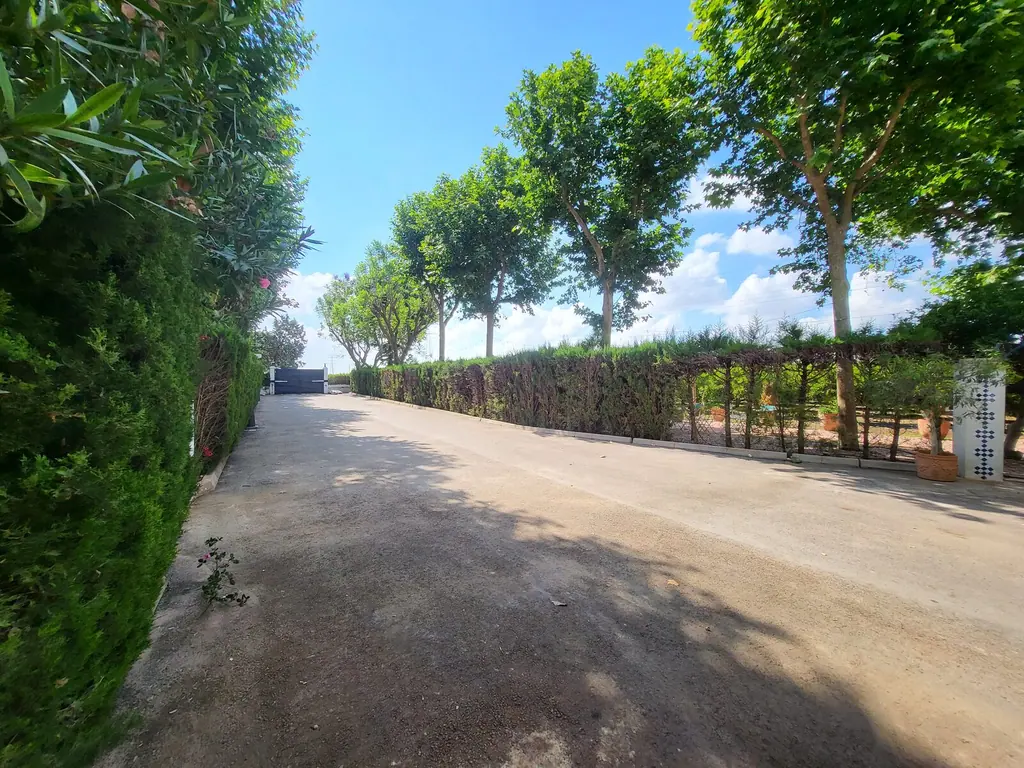
A hundred metres of private tarmac drive, twelve wide. Room for twenty vehicles, and for a car with a trailer, which almost no house can offer.
Useful if you arrive with horses, motorbikes, or kit for a trade fair. EV charging point and garage.
The mandarin grove
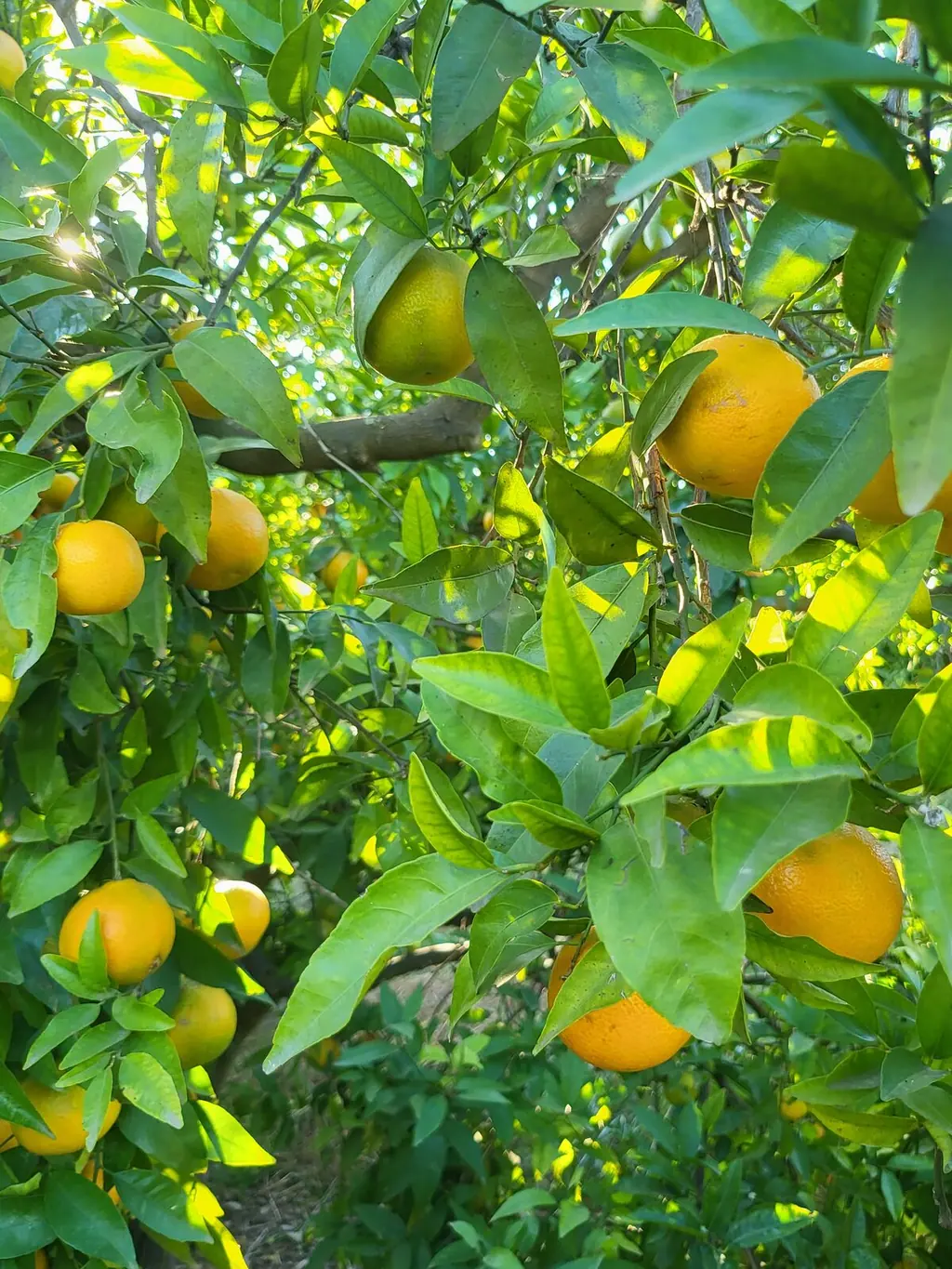
Six and a half hectares of Clemenules mandarins all around. They’re picked in winter, and you can smell it from the garden.
From €1,299 a night
The whole Villa for one group · VAT included · Two-night minimum
Included4,500 m² garden and pool · Cotton sheets · Pure cotton towels for the bathrooms and the pool · Anne Semonin shampoo, conditioner, shower gel and body lotion · Firewood for the fireplaces · Central heating and hot-and-cold air conditioning · Parking with EV charger · Fibre internet · Welcome pantry
Book your stay